
Technology
Play Hiezcoinx2.x9 Guide: How Blockchain Gaming Rewards Work


The online gaming world has changed quickly in recent years, especially with the rise of blockchain-based games. Many players now look for platforms where gameplay, digital rewards, and crypto-style systems come together in one place. One term that has gained attention in this space is play hiezcoinx2.x9, which appears connected with the idea of reward-based blockchain gaming. Before joining any such platform, players should understand how these games work, what rewards may mean, and what risks can come with digital earning systems. A smart player does not only chase rewards; they also learns the rules, checks platform safety, and plays with a clear strategy.
What Is Play Hiezcoinx2.x9?
Play hiezcoinx2.x9 can be understood as a keyword linked with blockchain-style gaming, where users may explore gameplay that includes digital tokens, reward points, or crypto-related features. These types of games usually combine entertainment with earning-based mechanics, which makes them different from traditional mobile or online games.
However, players should always remember that blockchain gaming is not only about winning. It includes digital wallets, transactions, platform rules, possible fees, and reward systems that may change over time. Because of this, learning the basics before playing is very important.
How Blockchain Games Work
Blockchain games use digital technology to record ownership, rewards, and transactions on a decentralized system. In simple words, some in-game items or tokens may exist outside the game itself, which means players may have more control over certain digital assets.
For example, a player may earn a token, unlock a digital item, or complete a mission that gives rewards. In many blockchain games, these rewards are connected to smart contracts or digital ledgers. This system can make the game more transparent, but it also requires users to understand security and account safety.
Why Players Are Interested in Reward-Based Games
Many players are attracted to reward-based gaming because it adds an extra layer of motivation. Instead of playing only for fun, users may also earn points, tokens, ranks, or digital assets. This makes the gaming experience feel more competitive and engaging.
At the same time, players should avoid thinking of these games as guaranteed income. Rewards can depend on skill, time, game rules, token value, market conditions, and platform activity. Therefore, play hiezcoinx2.x9 should be approached as a gaming experience first, not as a guaranteed earning method.
Main Features Players Usually Look For
When users explore blockchain gaming platforms, they often look for simple registration, smooth gameplay, clear reward rules, wallet support, and secure withdrawals. These features help players decide whether a platform is easy and trustworthy enough to use.
A good gaming platform should explain how rewards are earned, how they can be used, and whether any fees apply. If a platform hides important details or makes unrealistic promises, players should be careful before spending time or money there.
Getting Started Safely
Before starting with play hiezcoinx2.x9, players should first check whether the platform looks professional, has clear terms, and explains its reward system properly. It is also wise to avoid sharing private wallet keys, personal passwords, or sensitive financial information.
If a digital wallet is required, users should create one carefully and keep backup phrases offline. Security is one of the biggest parts of blockchain gaming because once crypto-related assets are lost, they are often hard or impossible to recover.
Understanding Rewards and Tokens
In blockchain games, rewards may come in different forms. Some games provide in-game points, while others use tokens that may have trading or exchange value. The exact reward system depends on the platform.
Players should read the reward policy before playing. They should know whether rewards are fixed, limited, seasonal, or based on ranking. This helps avoid confusion later, especially if rewards are not available immediately or require certain conditions before withdrawal.
Smart Playing Strategy
A good strategy is important in any competitive game. Players should understand the rules, practice consistently, and avoid rushing into paid features without knowing how the game works. Starting slowly helps users learn the system without unnecessary risk.
For play hiezcoinx2.x9, the better approach is to focus on learning first. Study how rewards are given, what actions matter most, and whether the game rewards skill, time, referrals, or purchases. Once the system is clear, players can make better decisions.
Common Mistakes to Avoid
One common mistake is joining a platform only because it promises big rewards. In blockchain gaming, very high earning claims should always be checked carefully. Real platforms usually explain risks clearly and do not rely only on hype.
Another mistake is ignoring security. Players should never connect their main wallet to unknown platforms. Using a separate wallet for gaming can reduce risk. Also, users should avoid downloading files or apps from unofficial sources.
Is It Good for Beginners?
Blockchain games can be exciting for beginners, but they may also feel confusing at first. New players need to understand basic terms like wallet, token, transaction, gas fee, and smart contract. Without this knowledge, simple actions can become risky.
Beginners interested in play hiezcoinx2.x9 should start with small steps. They should read the rules, test free features if available, and avoid investing money until they fully understand how the platform works.
Benefits of Blockchain Gaming
One major benefit of blockchain gaming is digital ownership. In some games, players may own items, tokens, or collectibles that are linked to their wallet. This creates a different kind of gaming experience compared to normal games.
Another benefit is transparency. Since blockchain records can be checked, players may get more clarity about transactions and rewards. Still, transparency depends on how well the platform is built and how openly it shares information with users.
Possible Risks Players Should Know
Every reward-based platform comes with risks. Token values can change, platforms can update rules, and some games may not deliver what they promise. Because of this, users should stay careful and avoid treating gaming rewards like fixed income.
There is also a security risk. Fake websites, copied apps, and phishing links are common in crypto-related spaces. Players should always double-check official sources before logging in, connecting wallets, or making any transaction.
How to Choose a Reliable Gaming Platform
A reliable blockchain gaming platform should have clear rules, visible support options, secure login, proper documentation, and realistic reward claims. It should also explain how user data and wallet connections are handled.
Before using any platform related to play hiezcoinx2.x9, players should search for user feedback, check whether the site has proper information, and review the terms. If important details are missing, it is better to wait than to take unnecessary risks.
Tips to Improve Your Gaming Experience
Players can improve their experience by setting limits, learning the game system, and tracking their progress. Keeping a record of rewards, spending, and time invested helps users understand whether the game is worth continuing.
It is also useful to join community spaces if they are official and active. Communities often share updates, tips, and common issues. However, players should avoid trusting random users who ask for wallet access or private information.
Future of Blockchain Gaming
Blockchain gaming is still developing, but it continues to attract attention because it gives players new ways to interact with digital rewards. As technology improves, games may become smoother, safer, and easier for everyday users.
Still, the future will depend on trust, real gameplay value, and platform transparency. Players want games that are enjoyable first and rewarding second. If developers focus only on earning claims, users may lose interest quickly.
Final Words
Play hiezcoinx2.x9 is a keyword connected with the growing interest in blockchain gaming and digital reward systems. These games can be exciting, but players should approach them with patience, research, and strong security habits. The best way to play is to understand the rules, protect your wallet, avoid unrealistic promises, and enjoy the game responsibly. Blockchain gaming may offer rewards, but smart decision-making remains the most valuable skill.
FAQs
What is play hiezcoinx2.x9?
Play hiezcoinx2.x9 appears to refer to a blockchain-style gaming keyword connected with digital rewards, tokens, or online earning-based gameplay.
Can players earn money from blockchain games?
Some blockchain games offer rewards, but earnings are never guaranteed. Rewards depend on platform rules, gameplay, token value, and market conditions.
Is blockchain gaming safe?
It can be safe if the platform is trusted and users protect their wallets. Players should avoid suspicious links, fake apps, and sharing private keys.
Do beginners need a crypto wallet?
Some blockchain games require a wallet, while others may allow basic access without one. Players should check platform rules before starting.
What is the best way to start?
Start slowly, read the rules, test free options if available, and never spend money until you fully understand how the game and reward system work.
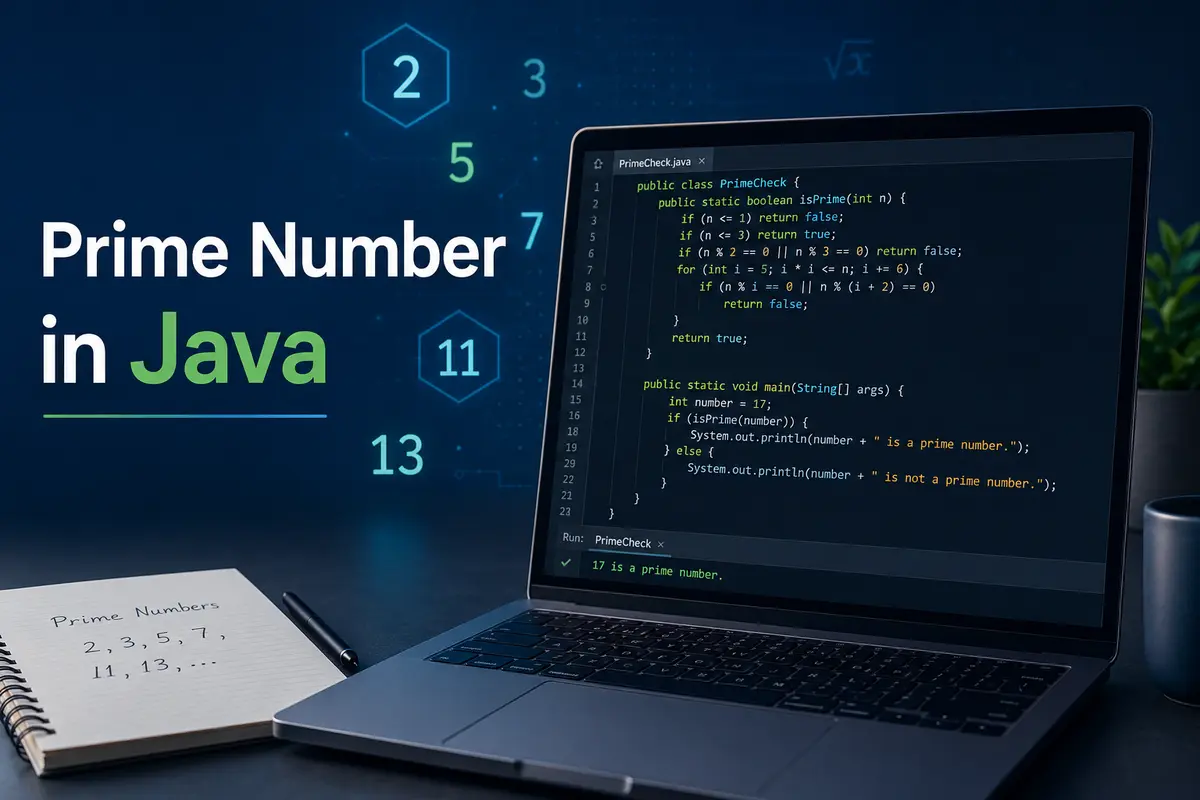
A prime number is a number greater than 1 that has only two factors: 1 and the number itself. In simple words, a prime number cannot be divided evenly by any other number except 1 and itself. For example, 2, 3, 5, 7, 11, and 13 are prime numbers.
Prime numbers are an important topic in programming because they help beginners understand loops, conditions, mathematical logic, and optimization. When learning Java, checking a prime number in Java is one of the most common practice problems.
Why Prime Numbers Matter in Programming
Prime numbers are not just a school-level math concept. They are widely used in computer science, especially in cryptography, hashing, number theory, and algorithm design. Many security systems depend on large prime numbers because they are difficult to factor.
For beginners, prime number programs are useful because they teach how to break a problem into smaller steps. You learn how to take input, use conditions, run loops, and improve performance. That is why the topic prime number in Java appears often in interviews and coding tests.
Basic Logic Behind Prime Number Checking
To check whether a number is prime, we need to test if it is divisible by any number other than 1 and itself. If a number has any divisor between 2 and one less than the number, then it is not prime.
For example, 9 is not prime because it is divisible by 3. But 11 is prime because no number between 2 and 10 divides it evenly. In Java, we usually use the modulus operator % to check divisibility.
Important Conditions Before Writing Code
Before writing the program, we should handle a few basic conditions. Any number less than or equal to 1 is not prime. The number 2 is prime because it has only two factors: 1 and 2.
Also, all even numbers greater than 2 are not prime. However, beginners usually start with a simple loop first, then improve the logic later. This makes the learning process easier and clearer.
Simple Program for Prime Number in Java
Here is a basic Java program to check whether a number is prime or not:
public class PrimeCheck {
    public static void main(String[] args) {
        int number = 29;
        boolean isPrime = true;

        if (number <= 1) {
            isPrime = false;
        } else {
            for (int i = 2; i < number; i++) {
                if (number % i == 0) {
                    isPrime = false;
                    break;
                }
            }
        }

        if (isPrime) {
            System.out.println(number + " is a prime number.");
        } else {
            System.out.println(number + " is not a prime number.");
        }
    }
}
This program checks every number from 2 to number - 1. If any value divides the given number completely, the program marks it as not prime and stops the loop.
How This Java Program Works
The variable number stores the value we want to check. The boolean variable isPrime starts as true, assuming the number is prime unless we find a divisor.
The if condition first checks whether the number is less than or equal to 1. If it is, the program immediately marks it as not prime. Otherwise, the loop starts from 2 and checks divisibility using the % operator.
Using Scanner for User Input
In real programs, we often want the user to enter a number. Java provides the Scanner class for this purpose. It allows the program to read input from the keyboard.
Here is an example:
import java.util.Scanner;

public class PrimeInput {
    public static void main(String[] args) {
        Scanner scanner = new Scanner(System.in);

        System.out.print("Enter a number: ");
        int number = scanner.nextInt();

        boolean isPrime = true;

        if (number <= 1) {
            isPrime = false;
        } else {
            for (int i = 2; i < number; i++) {
                if (number % i == 0) {
                    isPrime = false;
                    break;
                }
            }
        }

        if (isPrime) {
            System.out.println(number + " is a prime number.");
        } else {
            System.out.println(number + " is not a prime number.");
        }

        scanner.close();
    }
}
This version is more useful because it checks any number entered by the user. It is a good beginner-friendly example of prime number in Java.
Optimized Prime Number Logic
The basic program works, but it is not very efficient for large numbers. We do not need to check every number up to number - 1. Instead, we only need to check up to the square root of the number.
For example, if a number has a factor larger than its square root, it must also have a smaller matching factor. So, checking up to the square root is enough.
public class OptimizedPrimeCheck {
    public static void main(String[] args) {
        int number = 97;
        boolean isPrime = true;

        if (number <= 1) {
            isPrime = false;
        } else {
            for (int i = 2; i <= Math.sqrt(number); i++) {
                if (number % i == 0) {
                    isPrime = false;
                    break;
                }
            }
        }

        if (isPrime) {
            System.out.println(number + " is a prime number.");
        } else {
            System.out.println(number + " is not a prime number.");
        }
    }
}
This method is faster and cleaner. It is also better for interviews because it shows that you understand performance improvement.
Better Optimized Code Without Repeated Square Root
Although Math.sqrt(number) works fine, calling it again in every loop condition is not always ideal. We can store the square root value in a variable to keep the code simple.
public class BetterPrimeCheck {
    public static void main(String[] args) {
        int number = 97;
        boolean isPrime = true;

        if (number <= 1) {
            isPrime = false;
        } else {
            int limit = (int) Math.sqrt(number);

            for (int i = 2; i <= limit; i++) {
                if (number % i == 0) {
                    isPrime = false;
                    break;
                }
            }
        }

        System.out.println(isPrime ? "Prime number" : "Not a prime number");
    }
}
This approach improves readability and avoids repeated calculation. It is a small change, but small improvements matter when writing clean Java code.
Prime Number Program Using a Method
A better way to write Java code is to separate logic into methods. This makes the program easier to reuse and test. Instead of writing all logic inside main, we can create a method named isPrime.
public class PrimeMethod {
    public static boolean isPrime(int number) {
        if (number <= 1) {
            return false;
        }

        int limit = (int) Math.sqrt(number);

        for (int i = 2; i <= limit; i++) {
            if (number % i == 0) {
                return false;
            }
        }

        return true;
    }

    public static void main(String[] args) {
        int number = 31;

        if (isPrime(number)) {
            System.out.println(number + " is prime.");
        } else {
            System.out.println(number + " is not prime.");
        }
    }
}
This is one of the cleanest ways to write a prime number in Java program. The method returns true if the number is prime and false if it is not.
Printing Prime Numbers from 1 to 100
Sometimes the task is not just to check one number. You may need to print all prime numbers in a range. For example, printing prime numbers from 1 to 100 is a common beginner exercise.
public class PrimeRange {
    public static boolean isPrime(int number) {
        if (number <= 1) {
            return false;
        }

        for (int i = 2; i <= Math.sqrt(number); i++) {
            if (number % i == 0) {
                return false;
            }
        }

        return true;
    }

    public static void main(String[] args) {
        for (int number = 1; number <= 100; number++) {
            if (isPrime(number)) {
                System.out.print(number + " ");
            }
        }
    }
}
This program uses the same isPrime method and checks each number from 1 to 100. If the method returns true, the number gets printed.
Common Mistakes Beginners Make
One common mistake is treating 1 as a prime number. However, 1 is not prime because it has only one factor. A prime number must have exactly two factors.
Another mistake is forgetting to use break after finding a divisor. Without break, the loop continues even after the program already knows the number is not prime. This does not usually break the result, but it wastes time.
Time Complexity of Prime Number Program
The simple approach checks all numbers from 2 to n - 1, so its time complexity is O(n). This is acceptable for small numbers but slow for large values.
The optimized approach checks only up to the square root of the number, so its time complexity is O(√n). This is much better and is usually the preferred solution for checking a prime number in Java.
Final Thoughts
Learning how to check a prime number in Java is a great step for beginners because it builds a strong foundation in loops, conditions, methods, and optimization. The basic version helps you understand the logic, while the optimized version teaches better programming practice.
If you are preparing for coding interviews or improving Java basics, practice this problem in different ways. Try checking one number, printing prime numbers in a range, and writing reusable methods. These small exercises make your Java logic stronger over time.
FAQs
What is a prime number in Java?
A prime number in Java is checked using programming logic. The number must be greater than 1 and divisible only by 1 and itself.
Is 1 a prime number?
No, 1 is not a prime number because it has only one factor. A prime number must have exactly two factors.
Which operator checks divisibility in Java?
The modulus operator % checks divisibility. If number % i == 0, it means the number is divisible by i.
What is the fastest simple way to check a prime number?
The fastest simple way is to check divisibility only up to the square root of the number.
Why do programmers practice prime number programs?
Programmers practice prime number programs to improve logic, loops, conditions, methods, and basic algorithm skills.
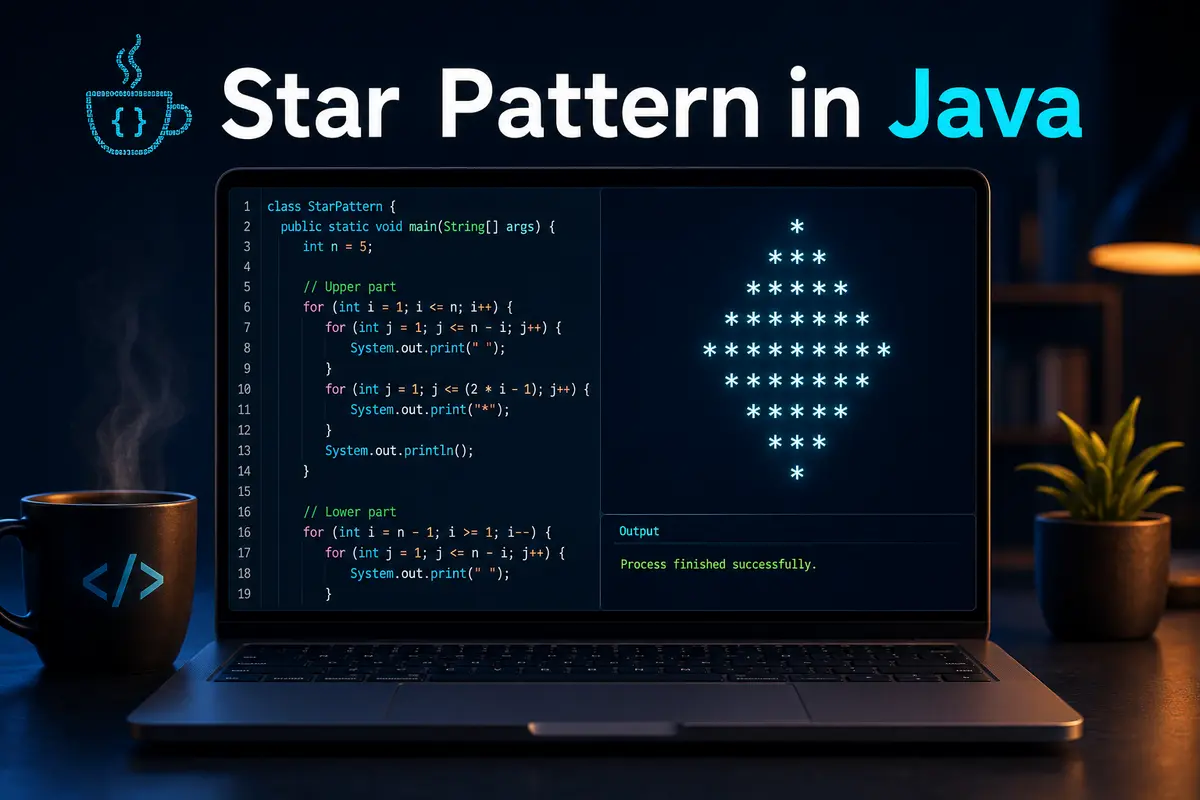
A star pattern in java is one of the most common beginner-level programming exercises. It helps new learners understand loops, nested loops, conditions, spacing, and output formatting. Although the idea looks simple, pattern programs build the kind of logic that developers use later in real coding tasks. When students practice these examples, they learn how a program controls rows, columns, symbols, and spaces step by step.
Why Star Patterns Matter
Many beginners ask why they need to learn pattern programs when real applications do not usually print stars on the screen. The answer is simple: pattern programs train your logic. They teach you how loops behave, how values increase or decrease, and how small changes in conditions affect the final output. This makes them useful for interviews, exams, and early programming practice.
Basic Concept
A star pattern in java usually works with rows and columns. The outer loop controls the number of rows, while the inner loop controls what appears inside each row. In most cases, the inner loop prints stars, spaces, or both. Once you understand this idea, you can create many different patterns by changing loop limits and print statements.
Simple Square Star Pattern
The square pattern is the easiest pattern to understand. It prints the same number of stars in every row. If the size is five, the program prints five rows, and each row contains five stars. This example is helpful because it introduces the basic structure of nested loops without adding spacing or complex conditions.
public class SquarePattern {
    public static void main(String[] args) {
        int n = 5;

        for (int i = 1; i <= n; i++) {
            for (int j = 1; j <= n; j++) {
                System.out.print("* ");
            }
            System.out.println();
        }
    }
}
Output of Square Pattern
The output of this program is simple and balanced. Each row has the same number of stars, so learners can easily see how the outer loop and inner loop work together. The outer loop moves to the next line, while the inner loop prints stars on the same line.
* * * * *
* * * * *
* * * * *
* * * * *
* * * * *
Right Triangle Star Pattern
A right triangle is another important star pattern in java because it shows how the inner loop can depend on the outer loop. In this pattern, the first row prints one star, the second row prints two stars, and the number keeps increasing until the final row.
public class RightTrianglePattern {
    public static void main(String[] args) {
        int n = 5;

        for (int i = 1; i <= n; i++) {
            for (int j = 1; j <= i; j++) {
                System.out.print("* ");
            }
            System.out.println();
        }
    }
}
Output of Right Triangle
This pattern teaches a useful rule: when the inner loop condition uses j <= i, the number of printed stars increases with each row. That is why the triangle grows from top to bottom. This logic is used in many beginner pattern questions.
*
* *
* * *
* * * *
* * * * *
Inverted Right Triangle
The inverted triangle works in the opposite direction. Instead of increasing the number of stars, it decreases them row by row. This pattern helps beginners understand how loop values can move downward. It also improves control over conditions where the output becomes smaller over time.
public class InvertedTrianglePattern {
    public static void main(String[] args) {
        int n = 5;

        for (int i = n; i >= 1; i--) {
            for (int j = 1; j <= i; j++) {
                System.out.print("* ");
            }
            System.out.println();
        }
    }
}
Output of Inverted Triangle
The first row contains the maximum number of stars, and each next row contains one less. This pattern is useful because it shows how decrement operators work in loops. It also prepares learners for more advanced shapes that combine increasing and decreasing logic.
* * * * *
* * * *
* * *
* *
*
Pyramid Star Pattern
The pyramid pattern is slightly more advanced because it uses both spaces and stars. Spaces appear before the stars to push them toward the center. After that, stars are printed in a controlled way to form a pyramid shape. This makes the program more useful for learning output alignment.
public class PyramidPattern {
    public static void main(String[] args) {
        int n = 5;

        for (int i = 1; i <= n; i++) {
            for (int space = 1; space <= n - i; space++) {
                System.out.print(" ");
            }

            for (int star = 1; star <= (2 * i - 1); star++) {
                System.out.print("*");
            }

            System.out.println();
        }
    }
}
Output of Pyramid Pattern
The pyramid pattern shows why spaces matter in programming output. Without spaces, the stars would appear as a simple triangle. With spaces, the shape becomes centered. This is an important step for anyone learning how to manage formatted text output.
    *
   ***
  *****
 *******
*********
Inverted Pyramid Pattern
The inverted pyramid starts with the widest row and becomes smaller with each line. It uses spaces first, then stars. However, the number of spaces increases while the number of stars decreases. This makes it a strong practice example for students who want to understand both loop directions together.
public class InvertedPyramidPattern {
    public static void main(String[] args) {
        int n = 5;

        for (int i = n; i >= 1; i--) {
            for (int space = 1; space <= n - i; space++) {
                System.out.print(" ");
            }

            for (int star = 1; star <= (2 * i - 1); star++) {
                System.out.print("*");
            }

            System.out.println();
        }
    }
}
Output of Inverted Pyramid
This output looks like a pyramid turned upside down. It helps learners see how changing loop direction affects the shape. It also makes spacing easier to understand because the empty space grows as the star count becomes smaller.
*********
 *******
  *****
   ***
    *
Diamond Star Pattern
A diamond is made by combining a pyramid and an inverted pyramid. The top part grows, and the bottom part shrinks. This is a popular interview and exam question because it checks whether a learner can combine two different loop structures in one program.
public class DiamondPattern {
    public static void main(String[] args) {
        int n = 5;

        for (int i = 1; i <= n; i++) {
            for (int space = 1; space <= n - i; space++) {
                System.out.print(" ");
            }
            for (int star = 1; star <= (2 * i - 1); star++) {
                System.out.print("*");
            }
            System.out.println();
        }

        for (int i = n - 1; i >= 1; i--) {
            for (int space = 1; space <= n - i; space++) {
                System.out.print(" ");
            }
            for (int star = 1; star <= (2 * i - 1); star++) {
                System.out.print("*");
            }
            System.out.println();
        }
    }
}
Output of Diamond Pattern
The diamond pattern improves problem-solving because it requires two parts to match properly. If the second loop starts from the wrong value, the middle line may repeat. That is why the lower part starts from n - 1 instead of n.
    *
   ***
  *****
 *******
*********
 *******
  *****
   ***
    *
Hollow Square Pattern
A hollow square prints stars only on the border. The inside area remains empty. This example introduces conditional logic inside nested loops. Instead of printing stars every time, the program checks whether the current position is on the first row, last row, first column, or last column.
public class HollowSquarePattern {
    public static void main(String[] args) {
        int n = 5;

        for (int i = 1; i <= n; i++) {
            for (int j = 1; j <= n; j++) {
                if (i == 1 || i == n || j == 1 || j == n) {
                    System.out.print("* ");
                } else {
                    System.out.print("  ");
                }
            }
            System.out.println();
        }
    }
}
Output of Hollow Square
This pattern is useful because it teaches decision-making inside loops. The program does not only repeat instructions; it also decides what to print based on row and column positions. That is an important concept for many real programming problems.
* * * * *
*       *
*       *
*       *
* * * * *
Common Mistakes
Beginners often make mistakes with spaces, loop limits, and System.out.println(). If println() is placed inside the inner loop by mistake, every star appears on a new line. If spaces are not counted properly, pyramids and diamonds lose their shape. Therefore, it is better to test each pattern slowly and understand the role of every loop.
Best Practice for Learning
When practicing a star pattern in java, do not memorize every program blindly. Instead, observe how rows and columns work. Start with simple patterns, then move toward pyramids, hollow shapes, and diamonds. Also, try changing the value of n to see how the output changes. This habit builds stronger logic than copying code without understanding it.
Where These Patterns Help
Pattern programs help in coding interviews, college assignments, and beginner Java practice. They also improve your comfort with loops, conditions, and formatted output. Once you understand these examples, it becomes easier to solve number patterns, alphabet patterns, matrix problems, and basic algorithm questions.
Conclusion
A star pattern in java may look like a small exercise, but it builds strong programming logic. It teaches nested loops, conditions, spacing, row control, and output formatting in a practical way. Beginners should start with square and triangle patterns, then move toward pyramids, diamonds, and hollow shapes. With regular practice, these programs make Java loops much easier to understand and apply in real coding problems.
FAQs
What is a star pattern in Java?
A star pattern is a program that prints stars in different shapes using loops and conditions.
Why are star patterns important for beginners?
They help beginners understand nested loops, spacing, conditions, and output formatting.
Which loop is best for star patterns?
The for loop is commonly used because it gives clear control over rows and columns.
Are star pattern programs asked in interviews?
Yes, they are often asked in beginner-level interviews, exams, and coding practice tests.
How can I get better at pattern programs?
Start with simple shapes, understand loop logic, then practice pyramids, diamonds, and hollow patterns.
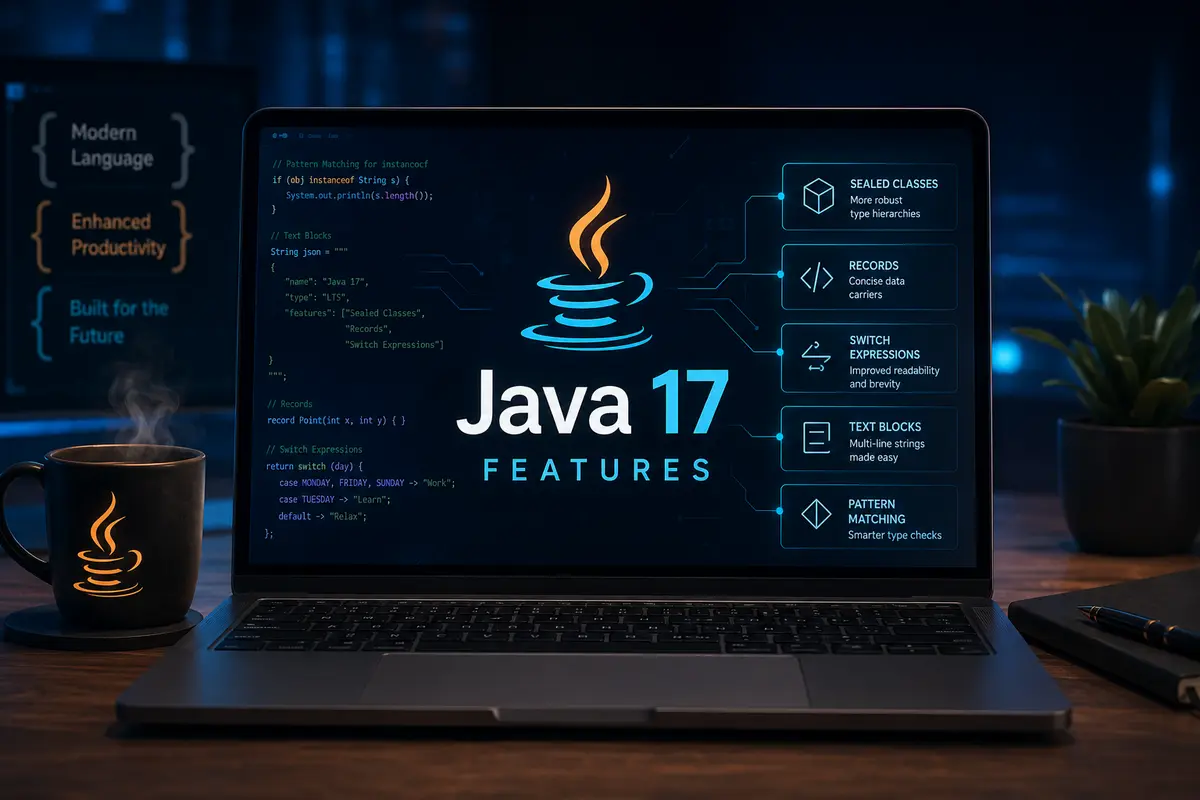
Java 17 features brought an important shift for developers because Java 17 is a Long-Term Support release. That means companies, teams, and individual programmers can use it with more confidence for production projects. Instead of only adding small language updates, Java 17 improved performance, security, readability, and long-term maintainability. It also finalized some features that had been tested in earlier versions. As a result, Java 17 became one of the most important Java releases after Java 8 and Java 11.
Why Java 17 Matters
Java has always focused on stability, but modern software also needs cleaner syntax and better performance. Java 17 balances both needs well. It gives developers useful tools without forcing them to change everything in an existing codebase. For businesses, this matters because upgrading to a Long-Term Support version reduces risk and gives teams a stronger base for future development.
Another reason Java 17 matters is its practical nature. Many of its improvements help with everyday coding. Developers can write less boilerplate, handle data more clearly, and design safer applications. Because of this, Java 17 is not just a version upgrade. It is a better foundation for backend systems, enterprise applications, cloud services, and modern APIs.
Sealed Classes
Sealed classes are one of the most useful additions in Java 17. They allow developers to control which classes can extend or implement a class or interface. This gives better structure to object-oriented design because the parent class decides the exact list of allowed subclasses.
For example, imagine an application that handles different payment methods. You may want only a few approved types, such as card payment, bank transfer, and wallet payment. With sealed classes, you can stop unknown classes from extending your main payment type. This improves safety and makes code easier to understand.
public sealed class Payment permits CardPayment, BankTransfer {
}

final class CardPayment extends Payment {
}

final class BankTransfer extends Payment {
}
This feature is especially helpful when working with domain models. It gives developers more control while still keeping the benefits of inheritance.
Pattern Matching for instanceof
Before Java 17, developers often had to check an object type and then cast it manually. This made code longer and sometimes less readable. Pattern matching for instanceof solves this problem by combining the type check and variable declaration in one step.
Here is the older style:
if (obj instanceof String) {
    String text = (String) obj;
    System.out.println(text.length());
}
With Java 17, the same code becomes cleaner:
if (obj instanceof String text) {
    System.out.println(text.length());
}
This looks like a small improvement, but it matters in real projects. Cleaner type checks reduce noise and make logic easier to follow. It also lowers the chance of casting mistakes.
Records for Data Classes
Records are another major improvement in Java 17. They help developers create simple data-carrying classes without writing repeated boilerplate code. In older Java code, a basic class often needed fields, constructors, getters, equals, hashCode, and toString. Records generate these automatically.
For example:
public record User(String name, int age) {
}
This short code creates an immutable data class with useful built-in methods. Records are perfect for DTOs, API responses, configuration objects, and simple data models.
However, records are not meant to replace every class. They work best when the main purpose of the class is to store and transfer data. If a class needs complex behavior or mutable state, a regular class may still be better.
Text Blocks
Text blocks make multiline strings easier to write and read. Before this feature, developers had to use escape characters and string concatenation for SQL queries, JSON samples, HTML templates, or large messages. That often made code messy.
Java 17 allows developers to write multiline strings naturally:
String json = """
{
  "name": "Ali",
  "role": "Developer"
}
""";
This is cleaner and easier to maintain. Text blocks are useful when writing test data, query strings, documentation snippets, or small templates inside Java code. They also reduce mistakes caused by missing quotation marks or incorrect line breaks.
Switch Improvements
Java 17 also improves the switch experience compared with older Java versions. Modern switch expressions can return values directly, which makes some logic shorter and clearer. This helps when a value depends on a limited set of cases.
Example:
String result = switch (day) {
    case "MONDAY", "TUESDAY" -> "Workday";
    case "SATURDAY", "SUNDAY" -> "Weekend";
    default -> "Other day";
};
This style avoids unnecessary break statements and reduces common switch-related errors. It also makes code easier to scan because each case clearly points to its result.
Strong Encapsulation
Java 17 strongly encapsulates internal JDK APIs. In simple words, it makes it harder for applications to rely on private internal parts of the JDK. This change may affect older libraries or legacy applications that used unsupported internal APIs.
Although this can create upgrade work, it is a healthy change for long-term stability. Applications should depend on public, supported APIs instead of internal JDK details. This makes future upgrades safer and reduces the risk of unexpected breakage.
Performance Improvements
Performance is always important in Java applications, especially for backend systems and cloud services. Java 17 includes several improvements in garbage collection, runtime behavior, and platform support. These changes may not always require code changes, but they can still improve application efficiency.
For many teams, performance benefits become visible after testing real workloads. Some applications may see better memory behavior, faster startup, or smoother runtime performance. However, results depend on the project, framework, infrastructure, and JVM settings.
Security Updates
Security is another strong reason to upgrade. Java 17 removes outdated features and strengthens the platform. It also continues the move away from older, weaker security practices. For production systems, this is important because security issues can become costly if they are ignored.
Using a modern Java version helps teams stay closer to current security standards. It also makes it easier to use newer libraries and frameworks that expect a modern runtime. Over time, staying on an old Java version can increase both technical and security risk.
Removed and Deprecated Features
Every major Java release removes or deprecates some old features. Java 17 continued this cleanup by removing outdated tools and marking older technologies for future removal. This keeps the platform cleaner and more focused.
Developers upgrading from Java 8 or Java 11 should review removed and deprecated items before migration. Most modern applications will not face serious problems, but older enterprise systems may need code or dependency updates. A careful upgrade plan can prevent avoidable issues.
Best Use Cases for Java 17
Java 17 is a strong choice for enterprise applications, microservices, REST APIs, financial systems, Android-related backend services, and cloud-based platforms. Its Long-Term Support status makes it suitable for projects that need stability over many years.
It is also a good version for learning modern Java. Students and new developers can understand current Java style through records, text blocks, switch expressions, and pattern matching. These features make Java feel cleaner while still keeping its familiar structure.
Java 17 Upgrade Tips
Before upgrading, check your dependencies. Some older libraries may not fully support Java 17. Updating frameworks like Spring Boot, Maven plugins, Gradle versions, and testing libraries can make the migration smoother.
Next, run your full test suite. Unit tests, integration tests, and performance tests can reveal hidden issues. Also, check JVM flags because some old options may no longer work. A careful staged upgrade is better than rushing the migration in one step.
Conclusion
Java 17 features make the language cleaner, safer, and more practical for modern development. Sealed classes improve design control, records reduce boilerplate, text blocks make multiline strings readable, and pattern matching simplifies type checks. At the same time, Java 17 offers stronger security, better long-term support, and useful performance improvements. For developers and businesses, it is a smart upgrade because it keeps Java stable while making everyday coding more efficient.
FAQs
What is the biggest benefit of Java 17?
The biggest benefit is Long-Term Support, which makes Java 17 a stable choice for production applications and long-term projects.
Are records useful in real projects?
Yes, records are useful for simple data classes, DTOs, API responses, and immutable data objects.
Is Java 17 better than Java 11?
Yes, Java 17 includes newer language features, performance improvements, stronger security updates, and better modern development support.
Do I need to change all my code for Java 17?
No, most code does not need a full rewrite, but older dependencies and internal JDK API usage should be checked.
Is Java 17 good for beginners?
Yes, Java 17 is good for beginners because it supports modern syntax while keeping Java’s core structure easy to learn.
-

 Automotive2 weeks ago
Ironmartonline Reviews: Is This Equipment Broker Legit?
-

 Technology1 week ago
What Is qilszoxpuz7.4.0.8 Bankroll? A Clear Guide for Readers
-
 Technology1 week ago
CSS Padding: A Practical Guide to Spacing Inside Elements
-

 Healthcare1 week ago
Is Zealpozold Safe? Complete Safety Guide Before You Use It
-

 Crypto1 week ago
Rndcoin KR: What It Means, How It Works, and What Users Should Know
-

 Technology1 week ago
Details of GDTJ45 Builder Software: Complete Guide for Safe Use, Features, and Setup
-
 Technology1 week ago
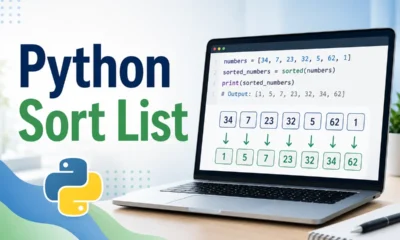
Python Sort List: A Clear Guide to Sorting Lists in Python
-

 Technology1 week ago
Best Weather Apps for iPhone: Accurate Forecasts, Radar, Alerts, and Daily Planning